Semantic Core and planning
The GCS controller plans the work and chooses which reasoning, memory, tools, and experts a task needs.
GNUS.ai combines Genius Cognitive System (GCS)—a Semantic Core, specialized expert models, governed memory and verification—with SuperGenius distributed compute. Mainnet implementation is complete; public launch is being coordinated with GCS and the first applications.
Network Status
The SuperGenius mainnet implementation is complete. Public activation is held until GCS, Genius AI Boss, and other launch applications are ready. Live network metrics will appear after launch.
Implementation completion is not the same as public deployment, independent audit, or production-scale performance. See the current platform status for the release distinction and launch dependencies.
Genius Cognitive System
GCS is more than agents on top of a model or a large model split across GPUs. It combines a Semantic Core, selected Expert Language Models (ELMs), governed memory, and independent checks for each task.
The GCS controller plans the work and chooses which reasoning, memory, tools, and experts a task needs.
GCS selects compact, domain-focused ELMs rather than treating every request as one large model invocation.
Structured memory can preserve important facts, events, and lessons, with privacy scopes and retention rules.
GCS checks cognitive answers separately from the controls that verify distributed work and settlement.
GCS decides what work to perform and how to check the result. SuperGenius provides peer-to-peer compute, processing, and settlement when distributed execution is needed. GCS also supports local and private execution modes: not every request goes to a public swarm.
A planned OpenAI-compatible API will let existing SDKs, IDE tools, and business apps call GCS using familiar request and streaming formats while GCS selects local, private, or distributed execution. This developer gateway is a v1.1 roadmap feature, not a live public API or a promise of full OpenAI feature compatibility.
GCS application integration is in progress. Detailed specifications describe the intended architecture and do not imply that every subsystem has been deployed.
Features
GNUS.AI bridges decentralized computing with cross platform accessibility, unlocking affordable AI/ML capabilities across any device.

GNUS SDK integrations target desktop and mobile environments. Compatibility with a device, console, or IoT platform depends on the specific build and integration.

Distributed scheduling and recovery are designed for resilience. Public mainnet is not active yet, and no production uptime guarantee is stated.

The platform supports architectural choices for local, private, and distributed work. Available interfaces and privacy guarantees depend on the application.
The platform is designed to support application-led adoption:

The native network is designed for low-overhead processing and settlement. Measured performance and reliability require published benchmarks.

GCS and GNUS aim to use small, specialized models where hardware supports them. Performance depends on the model, device, and execution mode.
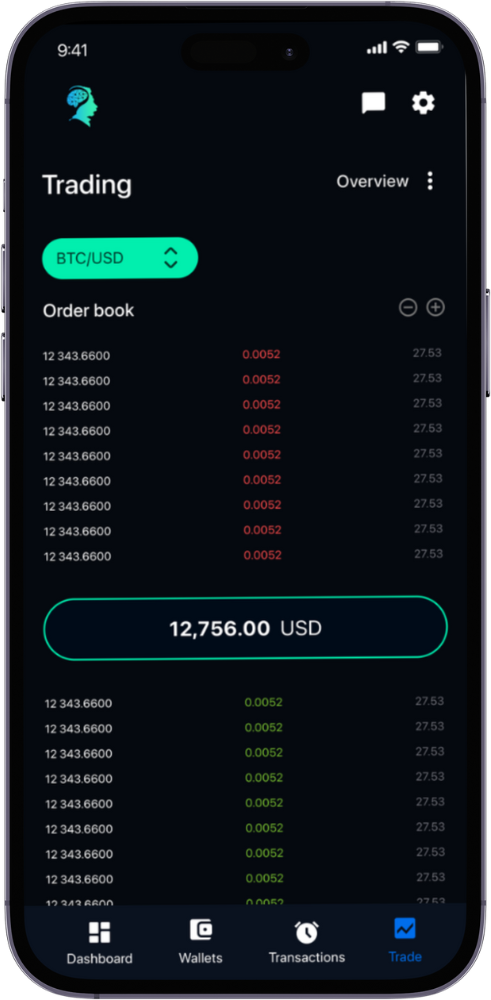
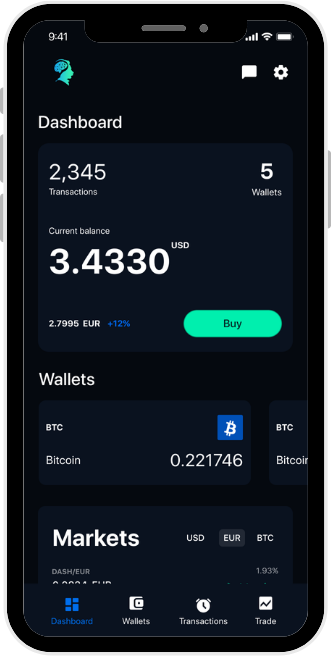
Preview screenshots — the wallet app is still in active development, final UI may differ.
Under the Hood
This illustrates a GNUS distributed processing flow, not a claim that public mainnet jobs or rewards are available today. The SuperGenius implementation is complete; public activation is pending.
An application prepares a processing request, identifies the required data, and arranges payment under the supported network rules.
Eligible jobs may be divided and scheduled on participating devices; local and private processing are also possible.
Nodes execute assigned work. Execution checks are distinct from checks of the accuracy or quality of an AI answer.
The network applies its configured job accounting and settlement rules. Allocation and burn settings must be verified for the actual deployment.
The Token
GNUS is designed for compute payments and application use. EVM token contracts are live; native SuperGenius public processing is not yet active.
GNUS is intended for AI and machine learning processing payments once the public SuperGenius network and launch applications are ready.
Developers can use the GNUS SDK to integrate GNUS into games and applications, subject to supported product and network features.
When the public network launches, eligible devices may contribute processing work and receive GNUS under the applicable network reward rules.
For Developers
Integrate GNUS payments directly into your game or app with the official SDK bindings.
More networks are on the way. Follow our official channels for launch announcements.
The native SuperGenius processing burn, EVM contract burns, and job payout allocation serve different purposes. No fixed payout split is asserted for a public mainnet that has not launched.
The SuperGenius code defines a 1% genesis default, with quorum-controlled changes. The default is not proof of the current or future live configuration.
EVM contracts also burn tokens during certain child-token conversions and bridging operations. These are separate from a native processing payout, and a bridge burn may be matched by a destination mint.
GNUS and SGNUS: EVM token contracts are separate from the native SuperGenius network. The public GNUS/SGNUS bridge is not live, and native mainnet activation is still pending application readiness.
Read current tokenomics notes and technical distinctionsHow It Compares
Most decentralized compute networks aggregate data center or specialist GPU hardware. GNUS.AI is built around everyday consumer devices instead.
| Project | Focus | Chain | Compute source |
|---|---|---|---|
| GNUS.AI | GCS specialist AI and distributed compute; GNUS tokens used for eligible network settlement | Ethereum, Polygon, BNB Chain, Base | Everyday consumer devices (phones, desktops) via the GNUS SDK |
| Render Network | 3D rendering, expanding into general GPU compute | Solana | GPU render node operators |
| Akash Network | General purpose decentralized cloud compute | Cosmos (own chain) | Data center and independent server providers |
| io.net | Aggregated GPU clusters for AI/ML workloads | Solana | Data center, crypto miner, and independent GPU clusters |
Comparisons reflect each project's own public positioning and are provided for general orientation, not a claim of superiority.
Roadmap
Separate the software we have built from the applications and release work still underway.
Distinguishing deployed EVM tokens from completed native mainnet software.
GNUS contracts exist on Ethereum, Polygon, BNB Chain, and Base. These EVM deployments are separate from SuperGenius public mainnet activation.
The core mainnet software is complete. The native public mainnet has deliberately not been activated yet.
Core SDK and Unity, React Native, and TypeScript bindings are available in public GitHub repositories.
Coordinating applications, integration, and validation before public activation.
Integrating the Semantic Core, selected expert models, governed memory, and verification with local, private, and distributed execution.
Preparing the applications intended to provide useful workloads when the public network opens.
Preparing and validating the token-to-native-network bridge. This is not a claim of a live public bridge.
No new public launch date has been announced.
Public activation will follow application and deployment readiness, not another mainnet implementation milestone.
Publish live node counts, completed jobs, compute hours, and evidence-backed performance once available.
Future network support will be announced separately from the chains with existing EVM token contracts.
Ecosystem
GNUS.AI is a full ecosystem, not just a landing page. Governance, code, and documentation all live in the open.
Trusted By
And the wider network behind GNUS.AI